
When I was little I always wondered where the helium balloons with cartoon shapes that they bought me at festivals in my town went when they escaped. Although I soon learned that balloons did not fly to the ends of the Universe, but rather exploded when they ran out of pressure, I was curious to know how far they would be able to go until they ran out of helium and the distance they would travel.
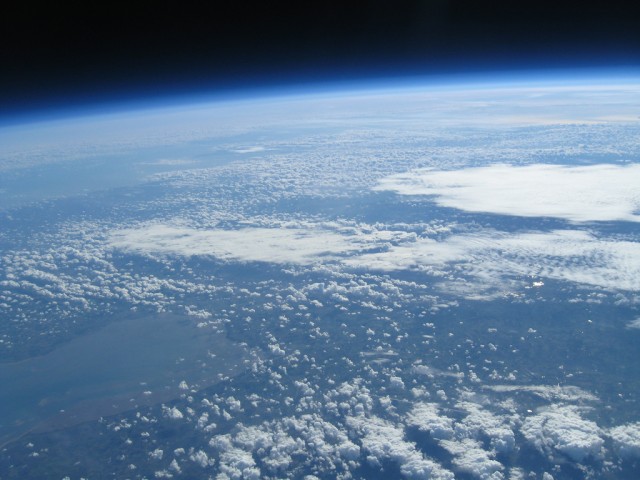
And then Robert Harrison, a British space lover, appears and decides to tie a compact camera to a helium balloon and release it to see how far he can go, which he called “Icarus”. But Robert is not stupid at all, quite the opposite, so he also puts a parachute on the camera so that it does not break down on the way and back, but he also decides to use a GPS to know the position of the balloon at all times and a mini computer to program automatic photographs.
What is not entirely clear to me is how he managed to get the camera to fall in Great Britain and not in the middle of the ocean, because theoretically the wind (both on the way up and on the way down) should greatly affect its trajectory, especially at a distance of 35km high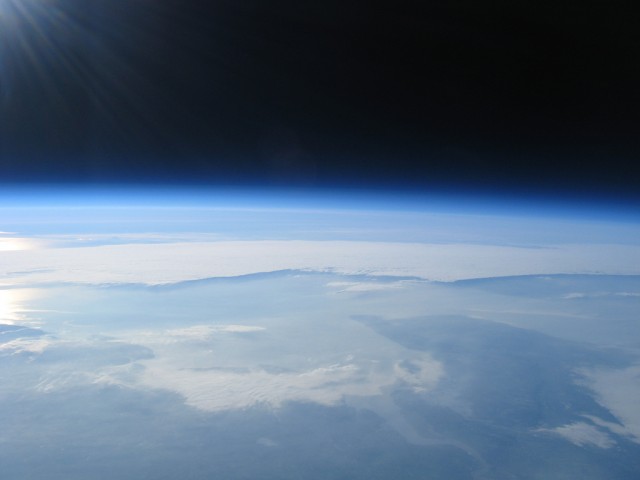
Doesn’t it convince you? Well on their website you can take a look at all the photographs taken up there and also a video (I suppose the camera would take photos and record video at different time intervals), as well as documentation on the preparation of the “experiment”.
| Via | DailyMail |
|---|
**