 Continuando con el reportaje sobre el viaje a Turquía que comenzamos con unos datos de interés sobre Turquía. Uno de los motivos por los cuales muchos españoles se echan atrás a la hora de elegir Turquía como destino vacacional es el “miedo” al fanatismo musulmán. En este reportaje os voy a contar mi experiencia en las 2 semanas en las que he podido conocer de primera mano facetas de la religión y cultura turcas.
On the organized tours you are accompanied by a Spanish-speaking guide at all times, which is very useful when it comes to finding answers to many questions, which is why most of the data that I have come from the guide and the local people.
The first thing the guide wanted to emphasize to us when we started the circuit, and which he repeated several times during the 9 days, was “we Turks are not Arabs”. For us, at least until we delve deeper into the subject, the countries of North Africa and the Middle East are known as “Arab countries” and we tend to associate a common image with them: covered women, a sexist society subordinated to the Muslim religion and with Arabic language and writing. But do these circumstances occur in the Eurasian country?
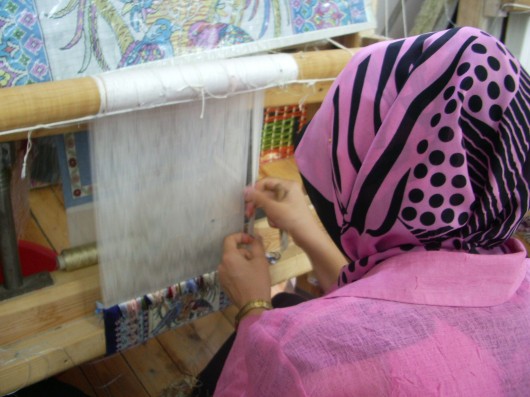
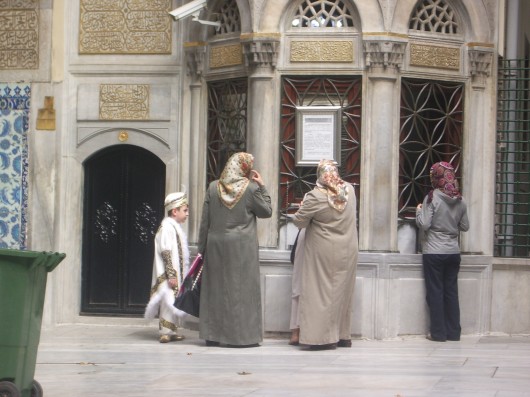
In Turkey you could see women covered, but you have to differentiate the way they covered themselves: on the one hand there were the women covered by black cloth in which they only left space for the eyes, immigrants from Saudi Arabia and neighboring countries to whom Turkish citizens did not have a special appreciation (because they got upset when people asked them why their women were like that, and they always stressed that they were not Turkish and that of the country’s 70 million inhabitants there were only 30,000 women who followed these practices). On the other hand, we have women who wear the so-called Islamic veil, very numerous in the country and who generally wear the scarf covering their hair of different colors and with drawings and prints (although there were many women who showed part of their hair and others with the black scarf). These women combined the veil with the latest clothing such as tight jeans, low-cut tops and Nike sneakers. According to the guide’s explanations, this is because the Quran refers to the need to cover parts of the body, but it does not specify what or how, so each person can interpret it in a different way; In addition, he commented that the use of the Islamic veil currently responds more to a family tradition than to a religious ruling (since daughters grow up seeing their mothers wearing the scarf and follow their example, one of the reasons for prohibiting it in public places, since teachers who wear scarves could serve as a model for girls).
As to whether Türkiye is a sexist society…yes. Our guide openly confessed it to us, and told us that we had to admit things as they are and, although women are increasingly acquiring greater importance in society, they still have a way to go until they are on par with men.
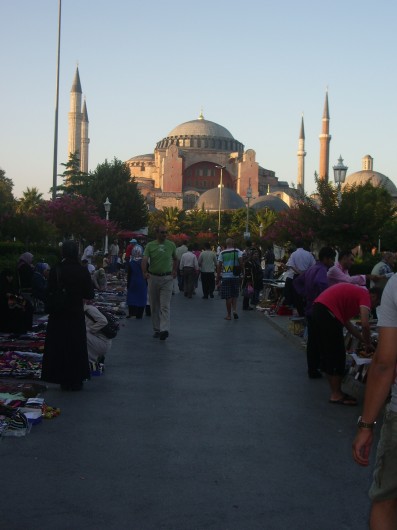
Going a little deeper into the Muslim religion, in the land of the former Ottoman Empire they follow a state model for the control of religion. I was particularly amazed when he explained to me the system they have: the State controls religion in the country, when a mosque has to be built it provides capital for it (although it can also be paid for by an individual) and to be an imam (equivalent to the priest here) or mujahideen (the one who calls to prayer) you have to take a high school degree specialized in religion. In turn, the Friday proclamations given by the imam in the mosque are sent by a State commission for the control of religion, in order to avoid the negative influences that the imams could have among the speakers. At school they have a religion subject in which the basic principles of all religions are taught, but it goes much deeper into the Muslim religion, based on historical facts and not on instilling practices similar to the catechism here in Spain (for this you have to take a private course in Koranic schools, the State does not allow these practices in public schools).
The Turkish language is not Arabic, it is as if we were comparing English and Spanish. In the past they had the Arabic writing, which made literacy very complicated, but after the founding of the first republic the Latin alphabet was established disassociating itself from Arab culture. Our guide told us that a 6-year-old child can know how to recite 4000 verses of the Koran (in Arabic) but has no idea what they mean, something that depends on the family and environment, and on himself in the future. For example, the guide we had was non-practicing Muslim (he did not share the 5 precepts to be a good Muslim and believed that a good Muslim is someone who is a good person, not someone who prays 5 times a day and then treats women badly) but his parents were practicing Muslims (his mother was veiled and his father drank Raki, a Turkish national drink and with alcohol, every day) and of 6 brothers, 2 of them did Ramadan and the rest No, some prayed in mosques, others did not. They all lived together and respected each other and each one lived religion in their own way.
Therefore, my conclusion after the trip regarding Turkish culture and religion is that it is a majority Muslim country in which everyone lives religion in their own way, except in isolated rural environments and fundamentalist families. Something like in Italy, which is mostly Catholic but this does not imply fanaticism, although I have to admit that the use of the Islamic veil creates in many people a wrong view of the situation, although no matter how much I explain my experiences in that environment, skepticism will take its toll on many people until they decide to check it out for themselves, which I recommend.