

If you have shown interest in this article, it is probably because you spend some time in front of the computer and on the Internet. However, considering the influence that the internet has on our daily lives, Could you tell how it all started?.
I am pleased to present to you the translation of an article that I have read and enjoyed in English, which briefly tells how this whole internet thing started, including important people, dates, web pages and other information that will give you an idea of what this whole shebang called the internet really is and where it comes from.
While the entire history of the Internet could take up a few books, this article will help familiarize you with the major milestones and events related to the birth and evolution of the Internet between 1969 and 1999.
1969: Arpanet
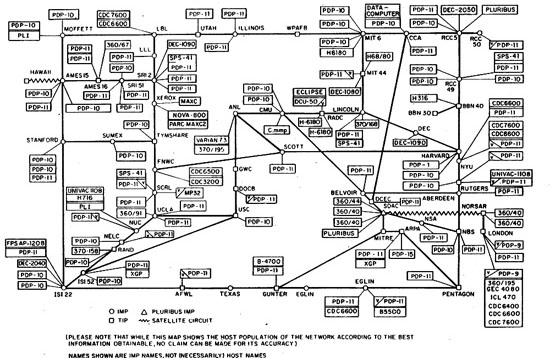 Arpanet fue la primera red real que se ejecutó utilizando la tecnología de conmutación de paquetes (nueva en aquel momento). El 29 de octubre 1969, los ordenadores de Stanford y UCLA se conectaron por primera vez y serían los precursores de lo que algún día se convertiría en Internet.
The first message sent over the network was supposed to be “Login,” but the link between the two schools reportedly failed at the letter “g.”
1969: Unix
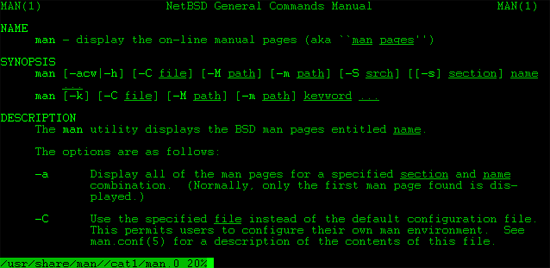 Otro hito importante de los años 60 fue la creación de Unix, el sistema operativo cuyo diseño ha influido mucho en el de Linux y FreeBSD (los sistemas operativos más populares hoy en día, los servidores web y en servicios de alojamiento web).
1970: The Arpanet network
An Arpanet network was established between Harvard, MIT, and BBN (the company that created the “Interface Message Processor” computers, which would be used to connect to the network in 1970).
1971: Email
 Correo electrónico fue desarrollado por primera vez en 1971 por Ray Tomlinson, quien también tomó la decisión de utilizar el símbolo “@” para separar el nombre de usuario del nombre del equipo (que más tarde se convertiría en el nombre de dominio).
1971: Project Gutenberg and Electronic Books (eBooks)
 Una de las novedades más importantes de 1971 fue el inicio del Proyecto Gutenberg.El Proyecto Gutenberg, para quienes no están familiarizados con el sitio, es un esfuerzo global para hacer libros y documentos de dominio público disponibles en formato electrónico.
It all started when Michael Hart had access to a large block of computing time and came to the conclusion that the future of computers was not computing itself, but in the storage, retrieval and search of information that, at that time, was only available in libraries. He wrote by hand (there was no OCR at that time) the “Declaration of Independence of the United States”, and launched Project Gutenberg so that the information contained in the books could be widely disseminated in electronic format. That was the birth of the electronic book.
1972: CYCLADES
France started its own Arpanet project, called Cyclades in 1972. While Cyclades was eventually closed, it left behind an idea that would be key to the future: the host computer should be responsible for data transmission rather than the network itself.
1973: The first transatlantic connection and the popularity of email
Arpanet made its first transatlantic connection in 1973, with University College London. During the same year, email accounted for 75% of all Arpanet network activity. 1974: The beginning of TCP/IP
The beginning of TCP/IP
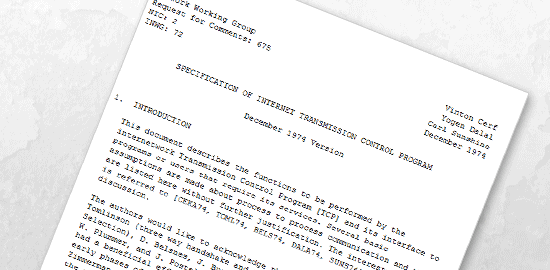 1974 fue un año decisivo. Se publicó una propuesta para vincular todas las redes similares a Arpa para formar una más grande, llamada “Inter-Network”, que no tendría ningún control central y trabajaría en torno a un protocolo de control de transmisión (que finalmente se convirtió en el TCP/IP).
1975: The email client
With the popularity of email, the first modern email program was developed by John Vittal, a programmer at the University of Southern California in 1975. The most important technological advance of this program (called MSG) were two functionalities: “Reply” and “Forward”.
1977: The PC modem
 1977 fue un gran año para el desarrollo de Internet como lo conocemos hoy en día. Ese, año, apareció el primer módem de PC, desarrollado por Dennis Hayes y Dale Heatherington, que fue presentado y vendido a unos aficionados a los ordenadores.
1978: The Forum or Bulletin Board System (BBS)
The first Bulletin Board System (Bulletin Board System in English) or “forum”, was developed during a snow storm in Chicago in 1978.
1978: SPAM is born
1978 is also the year that brought the first unsolicited commercial email message (which would later be known as Spam), sent to 600 users of Arpanet California by Gary Thuerk.
1979: MUD - The precursor of multiplayer games
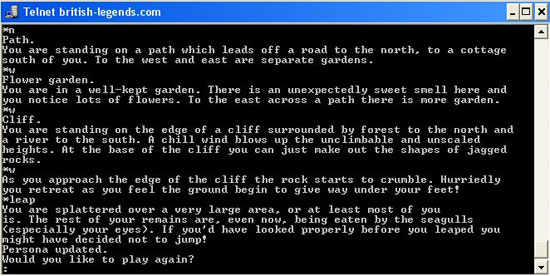 El precursor de World of Warcraft y Second Life fue desarrollado en 1979, y se llamaba MUD (abreviatura de MultiUser Dungeon o Mazmorra Multiusuario). Los MUD eran mundos virtuales basados en texto, que combinaban elementos de juegos de rol, ficción, y chat.
1979: Usenet
1979 also introduced Usenet onto the scene, created by two graduate students. Usenet is an Internet discussion system, allowing people from all over the world to converse about the same topic by posting public classified messages in newsgroups.
1980: ENQUIRE software
The European Center for Nuclear Research (known as CERN) launched ENQUIRE (written by Tim Berners-Lee), a hypertext program that allowed scientists in the physics laboratory of Particles keep track of people, programs and projects using hypertext (hyperlinks or links).
1982: The first emoticon
 Si bien muchas personas adjudicaron a Kevin MacKenzie la invención de los emoticonos en 1979, fue Scott Fahlman en 1982 el que propuso utilizar :-) después de una broma, en lugar del original -), propuesto por MacKenzie. Así nació el emoticono.
1983: Arpanet computers switch to TCP/IP
January 1, 1983 was the deadline for Arpanet computers to switch to the TCP/IP protocols developed by Vinton Cerf. A few hundred computers were affected by the change. The name server (DNS) was also developed in ‘83.
1984: Domain Name System (DNS)
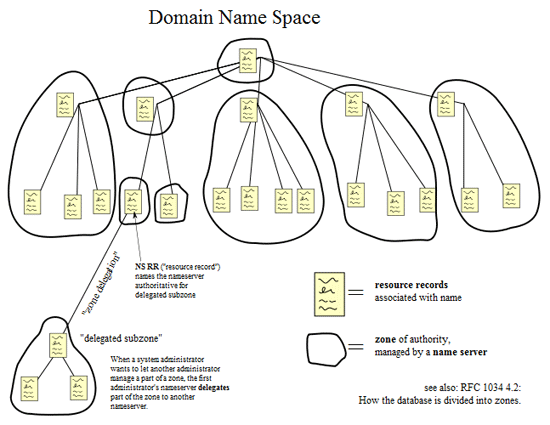 El Sistema de Nombres de Dominio (DNS) se creó en 1984 junto con los primeros Servidores de Nombres de Dominio (DNS). El DNS es importante ya que hace que las direcciones en Internet sean más humanas y fáciles en comparación con sus homólogos: las direcciones IP. Los servidores DNS permiten a los usuarios de Internet una manera fácil de recordar el nombre de dominio y luego los convierte a dirección IP automáticamente.
1985: Virtual Communities
1985 brought the development of “The WELL” (short for Whole Earth Electronic Link), one of the oldest virtual communities still in operation. It was developed by Stewart Brand and Larry Brilliant in February of ‘85 and began as a community of Whole Earth Review readers and writers. It was like a “very literate and uninhibited intellectual meeting.” Wired magazine once called A The WELL “The Most Influential Online Community in the World.”
1986: War of Protocols
The so-called protocol war began in 1986. Countries in Europe at that time were following Open Systems Interconnection (OSI or Open Systems Interconnection), while the United States used the Internet/Arpanet Protocol. The latter finally won.
1987: Internet grows
In 1987, there were about 30,000 servers on the Internet. And although the original ARPANET protocol had been limited to 1,000 hosts, the adoption of the standard TCP/IP protocol made connecting a greater number of computers possible.
1988: IRC - Internet Relay Chat
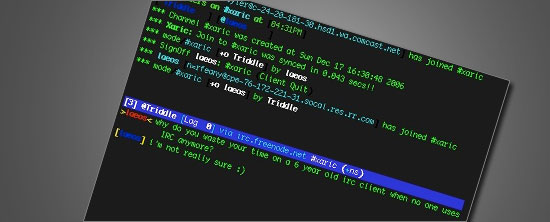 También en 1988, Internet Relay Chat (IRC) se desplegó por primera vez, allanando el camino para el chat en tiempo real y los programas de mensajería instantánea que utilizamos hoy.
1988: First major malicious attack on the Internet
One of the first and most important Internet worms was released in 1988. Known as “The Morris Worm”, it was written by Robert Tappan Morris and caused major disruptions across large parts of the Internet.
1989: AOL launched
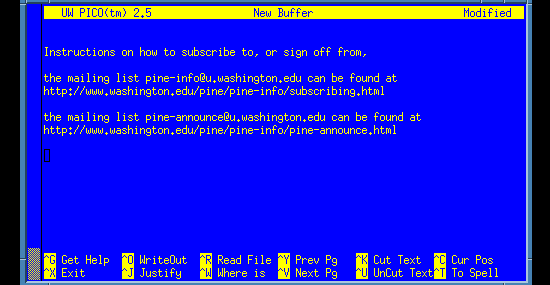 Cuando Apple sacó del programa de AppleLink en 1989, el proyecto cambió de nombre y de America Online nació. AOL, todavía existe hoy en día, y de hecho es uno de los lugares más populares de Internet entre los usuarios de habla inglesa.
1989: The World Wide Web proposal
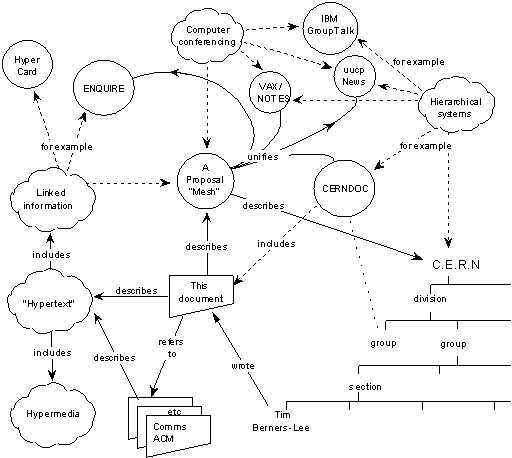 1989 también trajo la propuesta de la World Wide Web, escrito por Tim Berners-Lee. Fue publicado originalmente en la edición de marzo de MacWorld, y luego se redistribuyó en mayo de 1990. Fue escrito para convencer al CERN que un sistema de hipertexto global podría ser muy beneficioso para ellos. Originalmente fue llamada “Mesh”, el término “World Wide Web” fue acuñado cuando Berners-Lee estaba escribiendo el código en 1990.
1990: First dial-up connection provider (ISP)
In 1990, the first commercial dial-up connection provider appeared, The World. The same year, ARPANET ceased to exist.
1990: World Wide Web protocols completed
The World Wide Web code was written by Tim Berners-Lee and was based on his proposal from the previous year, along with standards for HTML, HTTP and URLs.
1991: First website
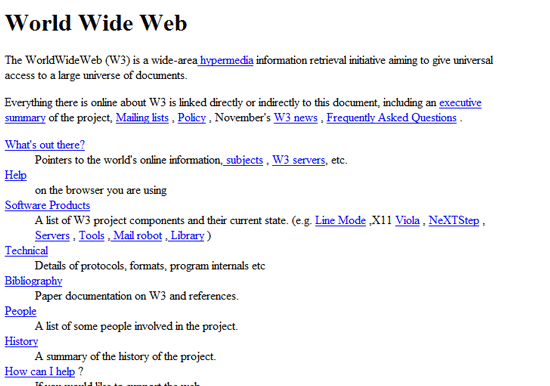 1991 introdujo algunas innovaciones importantes para el mundo de Internet. Fue creada la primera página web y, al igual que el primer correo electrónico, su objetivo era explicar lo que era la World Wide Web.
1991: First content search protocol
That same year, the first search protocol that examined the content of a page instead of just file names was created, it was called Gopher.
1991: MP3 becomes a standard
Additionally, the MP3 file format was accepted as a standard in 1991. MP3 files, with compressed audio, would later become a popular file format for sharing songs and entire albums over the Internet.
1991: The first Webcam
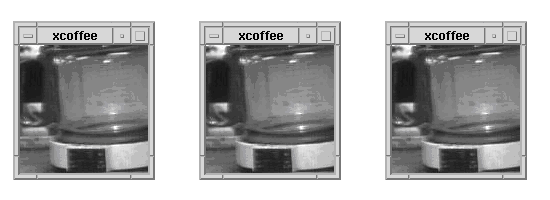 Una de las novedades más interesantes de esta época, sin embargo, fue la aparición de la primera cámara web. Se desplegó en un laboratorio de computación de la Universidad de Cambridge, y su único objetivo era vigilar una cafetera para permitir a los usuarios del laboratorio no malgastar el tiempo yendo a comprobar si el café estaba listo.
1993: Mosaic: The first graphical browser open to the public
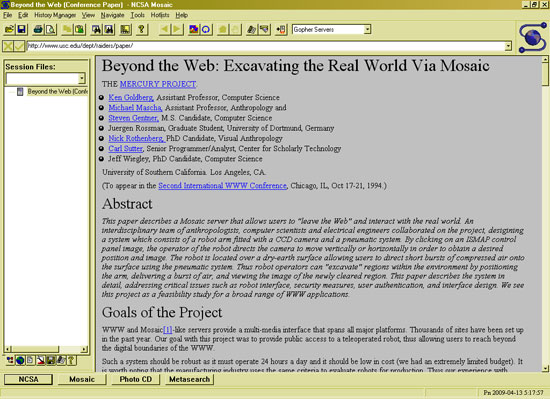 El primer navegador de Internet altamente descargado fue Mosaic, lanzado en 1993. Mientras que Mosaic no fue el primer navegador web, se considera el primer navegador dado que facilitó el acceso a Internet a la gente sin conocimientos técnicos.
1993: Governments join the party
In 1993, both the White House and the United Nations went online, ushering in .gov and .org.
1994: Netscape Navigator
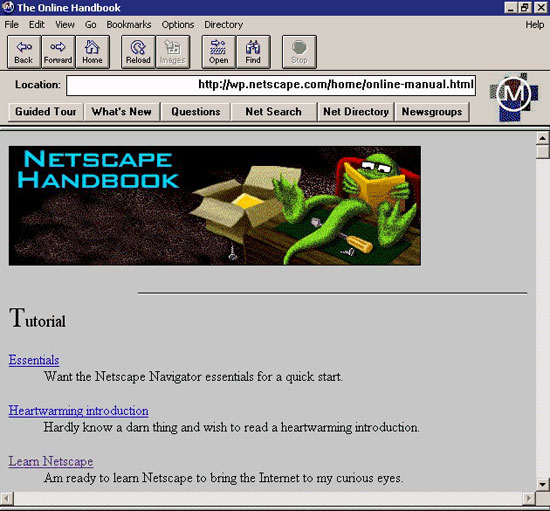 El primer gran competidor de Mosaic fue Netscape Navigator, que fue lanzado al año siguiente de su salida (1994).
1995: Internet Marketing
1995 is often considered the first year the web was commercialized. While there were online business ventures before ‘95, there were a number of key events that occurred that year. First of all, SSL (Secure Sockets Layer) was developed by Netscape, making it more secure for making financial transactions (such as credit card payments) online.
Additionally, two pretty big online businesses appeared that year. The first sale in “Echo Bay” was made that year. Echo Bay, which later became eBay. Amazon.com also appeared in 1995, although it did not make profits until 6 years later, in 2001.
1995: Geocities, the Vatican goes online, and JavaScript
Other important events that year included the launch of Geocities (which officially closed on October 26, 2009).
The Vatican also went online for the first time.
Java and JavaScript (originally called LiveScript by its creator, Brendan Eich, and deployed as part of the Netscape Navigator browser - see comments for explanation) were first introduced to the public in 1995. ActiveX was released by Microsoft the following year.
1996: First web service (webmail)
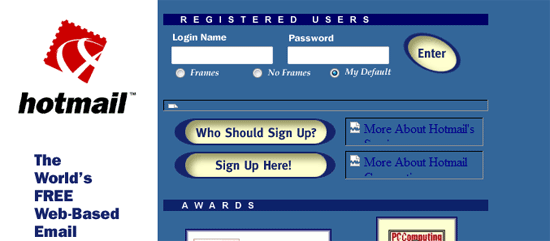 En 1996 aparece HoTMaiL ( las letras en mayúsculas son un homenaje a HTML), el primer servicio de correo web.
1997: The term “weblog”
Although the first weblogs did not begin to appear in Spain until a few years ago and even less recently did they not gain greater relevance, 1997 was the first year that the term “weblog” was used.
1998: First story to appear online earlier than in traditional media
In 1998, the first major news story reported by an online newspaper was about Bill Clinton and the Monica Lewinsky scandal (also known as “Monicagate,” among other nicknames), which was published in The Drudge Report after Newsweek had dropped the story.
1998: Google!
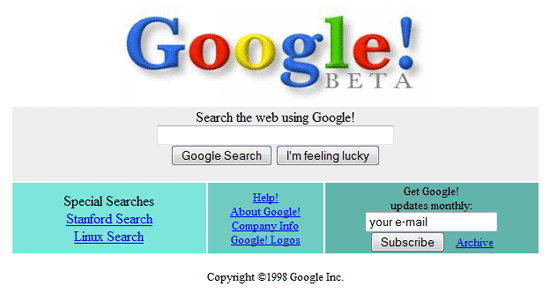 Google se puso en marcha en 1998, revolucionando la forma en que la gente encontraba información en línea.
1998: First P2P file sharing systems
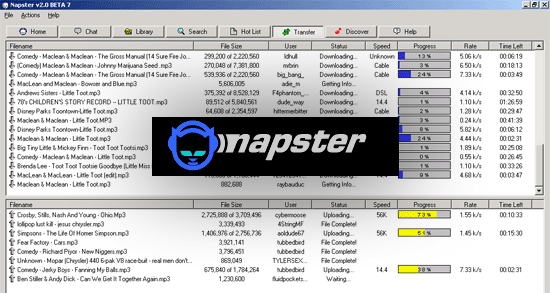
Also in 1998 Napster appeared, which opened the doors of audio file exchange systems over the Internet.
1999: SETI@home project
1999 is the year in which one of the most interesting projects put online was created: the SETI@home project. The project has created the equivalent of a giant supercomputer by harnessing the computing power of more than 3 million computers around the world, using their processors every time the screen saver is activated, when the computer is idle. The program analyzes data from radio telescopes to search for signs of extraterrestrial intelligence.